Governance

Imagine a commercial greenhouse containing a crop worth EUR 500,000.
Temperature is one of the variables that determines whether that crop survives.
Too cold for too long and growth may be damaged.
Too hot and the crop itself may be at risk.
The greenhouse therefore has deterministic capabilities such as:
read_internal_temperature()

read_external_weather()

adjust_heating()

control_ventilation()
Its desired outcome is simple to express:
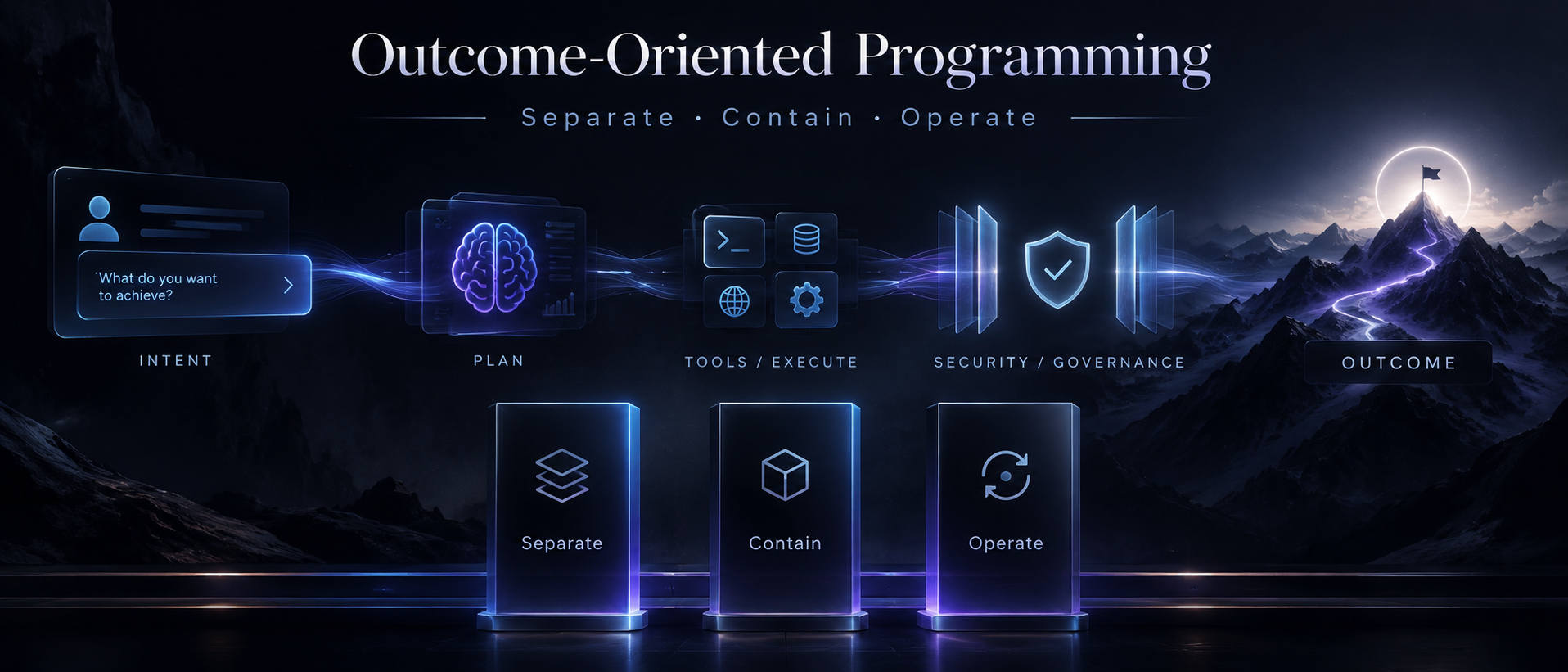
The current AI transition is often described as a revolution in software development.
Large language models generate code, tests, documentation and integrations. Natural language is increasingly becoming an interface to software construction, and development is becoming faster and cheaper.
But this is still, fundamentally, the traditional software model:
Requirement
    ↓
Developer + AI
    ↓
Code
    ↓
Application
    ↓
User
    ↓
Outcome
AI has accelerated the construction of the application.
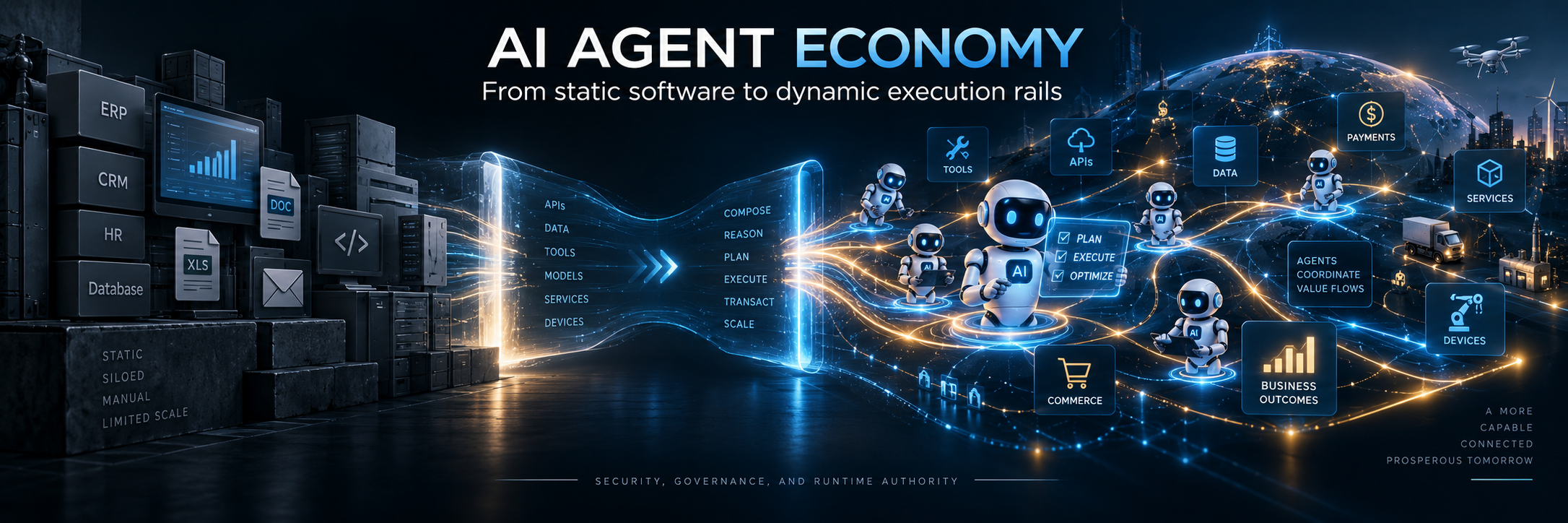
Economics has studied agency under asymmetric information for more than fifty years. Stephen Ross gave an early formal treatment of the principal-agent problem in 1973. Jensen and Meckling’s 1976 paper defined agency costs and integrated agency theory with property rights and finance to analyze ownership structure. Holmström, Grossman, Hart, Moore, Tirole and many others subsequently developed major parts of contract and organization theory. Work in this broader tradition later received Nobel recognition, including the 2016 prize to Oliver Hart and Bengt Holmström for contributions to contract theory.